What an Electrical Inspection Actually Checks
A walk-through of exactly what we look at, room by room, when we inspect a Portland home's wiring.
September 11, 2026 · 4 min read
You don't think about your home's wiring until someone makes you. Maybe a home inspector flagged something during a sale, an insurance company sent a letter, or you just noticed the panel feels warm when you touch it. Whatever got you here, it helps to know what actually happens during an electrical inspection, because most homeowners have never watched one from start to finish.
What we're actually looking at
An inspection isn't one test, it's a walk through the whole system, starting where power enters the house and ending at the outlet behind your couch. We've been doing this across Portland for more than thirty years, two generations of the same family, so we've seen just about every version of a house built before code caught up with how much power a modern home actually draws.
- The service panel: age, brand, available breaker space, signs of heat or corrosion
- Grounding and bonding, which a lot of older Portland homes never had installed
- Outlets and switches, checked for loose connections and missing GFCI protection near sinks and tubs
- Visible wiring in the attic, crawl space, and basement for damage or outdated materials
- Smoke detector placement, and whether they're hardwired or running on batteries alone
- Any past DIY work that doesn't match how the rest of the house was wired
When it's worth scheduling one
You don't need a reason to have your wiring looked at, but there are moments when it stops being optional. Buying or selling a home is the most common one, since a lender or an inspector will usually ask a direct question about the panel and the grounding. Renewing homeowners insurance is another, since some insurers now ask about panel age and wiring type before they'll renew a policy without a rider. And if your home was built before the 1970s and hasn't had an inspection since, it's worth doing simply because so much has changed about how much power a house is expected to carry.
GFCI protection, the kind required near sinks, tubs, and exterior outlets, works by shutting power off in a fraction of a second if it senses current leaking somewhere it shouldn't, like through a person. It's one of the simplest and most effective safety devices in a house, and it's also one of the most commonly missing pieces we find during an inspection, especially in kitchens and bathrooms that predate the requirement.
Why the panel gets the most attention
The panel is where most of the real risk lives, so it gets the closest look. We're checking for warm or discolored surfaces, a burning smell near the breakers, any buzzing or crackling when the panel is under load, and whether there's room left to add a circuit at all. A panel that's been maxed out for years, patched with extension cords running to whatever room needed more power, tells us a lot before we even open the door.
- Warm or discolored panel surfaces
- A burning smell near outlets or breakers
- Buzzing or crackling sounds
- Little or no room left for new breakers
- The house leaning on extension cords and power strips instead of outlets
- A panel that's more than 25 to 30 years old
If a panel does need replacing, it's not the ordeal people expect. Most panel upgrades finish in a single day, and we quote panel changes at a flat $3,495. Conditions apply, pricing is subject to change.
Knob and tube gets its own look
Homes in North Portland and St. Johns skew older than a lot of the metro, and knob and tube wiring still turns up more often than people expect. It's not automatically dangerous just because it's old, but the insulation degrades over decades, it was never designed for the load a modern kitchen or home office puts on it, and it has no grounding path, which is a real shock risk with today's appliances. It can also complicate insurance and it blocks you from insulating properly around it. When we find it, abatement is priced from $3,495 per attic or crawl space area. Conditions apply.
What happens after
You get a written summary, not just a verbal impression, with findings prioritized by how urgent they actually are rather than a wall of everything we noticed. If something needs to be scheduled, the work is permitted and coordinated properly, and estimates are typically ready within one to two weeks.
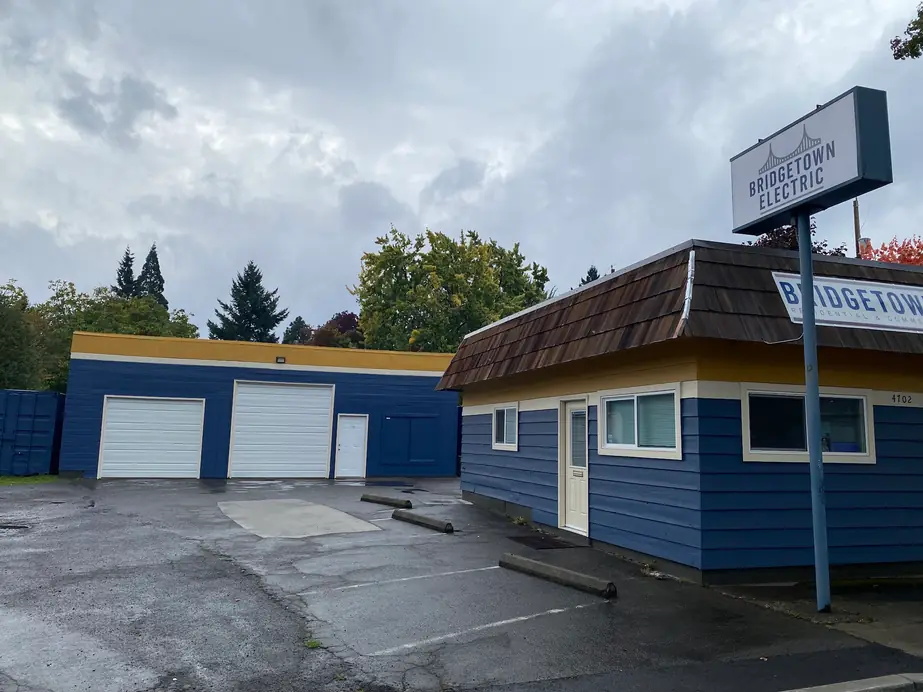
Bridgetown Electric has been family owned since 1994, licensed, bonded, and insured under OR CCB #103824. We're based at 4702 N Lombard St and we're in and out of North Portland and St. Johns attics more weeks than not. If you want a second set of eyes on your panel before it becomes a problem, call (503) 621-7122 or reach us at office@bridgetownelectric.com, Monday through Friday, 8 to 4.
Bridgetown Electric, (503) 621-7122
Call (503) 621-7122More articles
Signs Your Portland Panel Needs Upgrading
Breaker panels rarely fail all at once. Here's what they look like right before they do.
Six Signs Your Wiring Is Asking for Help
Wiring problems rarely announce themselves loudly. These six small signs are usually the only warning you get.